
A Long History of Writing Local History: The 25-Year Anniversary of the Magnolia Historical Society
By Monica Wooton
As the Magnolia Historical Society celebrates its twenty-fifth anniversary, we look back on two and a half decades of tireless volunteer work to preserve the stories and images that make up our Magnolia history. What began as a collaborative writing project turned into publishing three award-winning and -nominated books, the ongoing, online Book IV, and a collection of archived materials and photos to inspire many more years of sharing Magnolia history. Here’s to another twenty-five!
The origin story: How MHS got its start!
The Magnolia Historical Society (MHS) had its beginnings when an eager but untested team of volunteer writers first came together to write a new neighborhood history book. The Magnolia Community Club (MCC), now the Magnolia Community Council, had writer and Magnolian Aleua Frare produce a small volume of homespun, mostly anecdotal history, MAGNOLIA: Yesterday and Today, for the US Bicentennial celebration of 1976.

Fig. 1 Aleua Frare’s 1976 book is no longer available. The history provided was colorful and anecdotal. While not always accurate or using sourced material, it did provide plenty of clues for future writers to find first-person narrators and to locate and investigate academically researched material on many of the book’s topics.
Photo by Monica Wooton. 2026.
In 1998, the MCC decided that a new version would be written and that I, then chair of the MCC History Committee, would lead the effort. I had recently graduated from the University of Washington, having returned to finish university later in life, with a degree in English and a writing emphasis. I wanted to apply principles I had learned regarding collaborative writing processes to this new project.
I decided this neighborhood history would shy away from anecdotal history and include a formal process for writing memoir and academically-researched history using volunteers from Magnolia, most of whom were unpublished. It would be a team effort as well as an individual process—incorporating a formal, educational “How to Write History“ packet, a peer editor model, and a broad outreach campaign to the Magnolia community’s potential first-person narrators and research writers. The first call for volunteers began when I passed out flyers from a small, antique card table at the 1998 Summerfest for what I titled “The Magnolia Essay Project I.“

Fig. 2. Writing packets were created to help each writer/peer editor with their assignments. They contained history writing examples, sources and archive information, writing guidelines, writing team contacts, and formatting instructions.
Photo by Monica Wooton. 2019.
That first fearless and amazing group of thirteen writers quickly stepped up, and with two $10,000 City of Seattle Department of Neighborhood Matching Fund grants, the team began a journey of more than a year together: reading, researching, writing, and rewriting (especially rewriting!). The Magnolia Branch of The Seattle Public Library was the official headquarters and meeting place. Together, we sought out and studied family scrapbooks, interviewed the early movers and shakers of Magnolia, and researched and raided every archive in the City of Seattle for anything “Magnolia.“ We wrote down our own memoirs and memories and collected archival photos to illustrate our stories.
Paul Dorpat, Seattle Times history columnist and local historian, and Charles Payton, then Heritage Lead and Community Museum Advisor at 4Culture/King County Cultural Resources, provided inspiration, resources, and cheerleading for the team and book. Hal Will, who grew up on Magnolia in the twenties and thirties, was the first volunteer to step up. An excellent historian, researcher, photographer, and writer, he set the standard for great writing with his wonderful stories. Scott Smith, a lifelong Magnolian and civic activist, served as my assistant, chauffeur, and confidant—always there with good advice, a great sense of humor, and a take-out meal or sandwiches and cookies when the days ran long…and most did! My family rarely saw me.
Betty Samuelson provided many images, and connections to other Magnolians with history to share. She is another lifelong Magnolian and the niece and daughter of one of the few early dairy farming families on Magnolia, the Hansons of Merrymount Farm and Dairy, which was at 29th and 32nd Avenues West bordered by Barrett and Raye Streets. Sisi Sedgwick, who held writing classes on Magnolia and introduced writers to the project, connected us with her grandson Paul Langland, who would serve as the book designer for all three print books. His designs and aesthetic would set the standard for the Magnolia history books that followed. Whitney Mason, who was born at the Fort Lawton Hospital and grew up on Magnolia, joined as the first content editor. Without this team, the book would not have materialized. They were all there to move the process along smoothly and professionally. And they all had a personal stake in telling the history of the neighborhood they knew and loved.
The writers became a true chorus of voices—compatriots consulting maps, finding archival photos, and editing each other’s work into what became a beautiful coffee-table book of wonderful neighborhood history and images. MAGNOLIA: Memories & Milestones was published in 2000, and the team celebrated with a grand launch party and a team photo taken outside the library by Paul Dorpat—MHS traditions that have continued on with each new book and writing collection. The book received the Virginia Marie Folkins Award from the Association of King County Historical Organizations (AKCHO). The first printing sold out almost immediately and two subsequent printings followed.

Fig. 3. Cover of MAGNOLIA: Memories & Milestones, published by Magnolia Community Club, 2000.

Fig. 4. Members of Magnolia Essay Project I.
Front row (left to right): Joy Carpine (and Petey), Hal Will, John Hendron.
Second row: Scott Smith, Monica Wooton, Patty Small, Roy Scully.
Third row: Jonathan Wooton, Joan Santucci, Rob Hitchings, Shirley Will, Betty Ivie.
Fourth row: Gail Peterson-Martini.
Back row: Steve Erickson, Nancy Worssam, Dan Kerlee, Cindy Howell, Rob Wilson.
Members of the team not pictured: Claudia Callan, Bob Kildall, Rick Malsed, Sisi Sedgwick, Mimi Sheridan, and Sam Sutherland.
Photo by Paul Dorpat. 2000.
Making it official
In 2001, most of the thirteen volunteer Book I writers, enthused by the success of Book I and the history they had uncovered, strongly supported the idea of founding the Magnolia Historical Society (MHS) as a 501(c)(3) nonprofit organization. And as they say, “The rest IS history!“
The first bylaws were written, and the MHS mission was created and adopted on June 20, 2001. The first mission was as follows:
-
Initiate interest through our work in Magnolia historical studies and activities throughout the Seattle community.
-
Inspire interest in a common community collection of historical acquisitions and dutifully care of Magnolia’s archives using state of the art technologies and knowledge.
-
Invest in Magnolia historical research and cultural heritage to further activities for charitable, literary, and educational purposes and have a sense of enjoyment with hands-on historical projects and academic work.
-
Encourage a more complete and knowledgeable development of sense of place through the work of the Magnolia Historical Society.
Now, in 2026, the MHS mission reads:
-
Initiate interest in Magnolia history protecting it for future generations.
-
Inspire the Magnolia community to help us gather acquisitions for our photo and document archives at UW Special Collections.
-
Invest in community historical research and writing of Magnolia history that facilitates historic projects and events.
-
Encourage a more accurate “sense of place” through our work preserving the stories and images of Magnolia.
The society’s original, aspirational mission has not changed much in twenty-five years and has been successfully carried out. Society board members and volunteers, past and present, should be proud of the consistency of the mission and our work to meet it.

Fig. 5. Copy of Certificate of Incorporation making the Magnolia Historical Society an official nonprofit, April 6, 2001.
Image source: Courtesy of University of Washington Libraries, Special Collections, Accession No. 5345-004, Box/Folder 1/2.
Meanwhile, the University of Washington Libraries’ Special Collections, housed in Allen Library, agreed to provide archive space for the newly formed society, as it had collected many documents, ephemera, and archival photos while writing Book I.
Magnolian Virginia Baxter donated hundreds of excellent photo negatives that her husband, Ken, had taken for his own purposes and for the Magnolia News during the 1960s. Baxter’s donation was the genesis of a photo archive, which has proven to be a wonderful help in illustrating and tracking down more Magnolia history. An amazing infrared image of the iconic madrones along Magnolia Boulevard and a great shot of the West Point Lighthouse became the covers for Book I and II. Authors frequently dipped into the treasure trove of images to illustrate a story.
Today, MHS’s priceless documents and photos are permanently housed and protected at UW Libraries’ Special Collections and can be accessed in-person by the public (with an appointment). This is quite a privilege for a small historical society. The society’s ongoing work includes organizing and contributing to this collection of Magnolia history-related items, such as donated old photos, memoirs, photos, scrapbooks, ephemera, and documents.

Fig 6. Image source: Courtesy of University of Washington Libraries, Special Collections, Box PH0712 Box 6, Item KB55-56. Circa 1964.

Fig. 7. Image source: Courtesy of University of Washington Libraries, Special Collections, Box PH0712 Box 6, Item KB528-532. Circa 1960s.

Fig. 8. Image source: Courtesy of University of Washington Libraries, Special Collections, Box PH0712 Box 5, Item KB472. Circa 1960s.


Fig. 9. Image source: Courtesy of University of Washington Libraries, Special Collections. Box PH0712 Box 1, Item KB3. June 15, 1963.
Fig. 10. Image source: Courtesy of University of Washington Libraries, Special Collections, Box PH0712 Box 7, Item KB29-34. April 30, 1964.
Figs. 6–10. Ken Baxter’s hundreds of four-by-five and four-by-seven negatives reveal excellent mid-century photos documenting many of Magnolia’s historic events (last "Taps" at Fort Lawton, top left), dramatic Magnolia scenes (madrone trees—top middle—once the iconic tree on the Boulevard but now disappearing through disease, were identified mistakenly as magnolias by Captain George Davidson from a passing exploration vessel and was how Magnolia got its name), missed buildings and businesses (the Magnolia Theater, top right, now Chase Bank on that property), neighborhood happenings (moving a house to make way for other uses, bottom left), and common practices from the past (a paper drive at Catharine Blaine School, bottom right).
The writing never really stops
In the early 2000s, the historical society established itself as a reputable and reliable nonprofit and community organization. Its main activities included defining formal membership requirements and dues, building a board, presenting historical programs, appearing at Summerfest, outreach at other community events, creating an official newsletter, and establishing the Historic Person of the Year Award. Book I ownership remained with the MCC and was very profitable for it, but eventually, after some negotiation, ownership was finally passed along to the MHS.
Since the MHS founders were writers, written collections of Magnolia’s history remained top of mind. Book I had cemented the working relationship between Paul Langland as book designer and me as project manager . Roy Scully, a Magnolian and retired, renowned photographer for the Seattle Times, joined as a volunteer and taught me photography. The MHS learned from its first book that grants and donations would be needed, and indeed could be depended on to publish a significant volume. It also formalized the principle that all writers should be volunteers and had to be related to Magnolia in some significant way. The peer editing model proved to be a solid and valuable piece of story development. A professional editor, copy editor, and designer were added as paid members of the team, and Friesen’s of Canada remained our publisher.

Fig. 11. This collage summed up the experience of writing the first book and was created and given to every writer as a memento by Monica Wooton.
Image source: Courtesy of University of Washington Libraries, Special Collections, “Memories and Milestones“ collage, Box PH0712 Box 9, MW31. 2000.
While Book I, MAGNOLIA: Memories & Milestones, is a great mix of meaningful memoir and academically researched history, it is of no specific era. The next two efforts would be tied to distinct decades, continuing Book I’s much-loved design: a coffee-table book with robust written history.


Figs. 12–14. First newsletter of the society, published August 2001.
Image source: Courtesy of University of Washington Libraries, Special Collections,
Accession No. 5345-004, Box/Folder 1/13.
Then there were two
By 2005, it was decided that the society would manifest another collection of Magnolia memories—with the number 2 on the spine. We would attempt a second formal collection of first-person narratives and academically researched history, dedicated to life on Magnolia in the 1920s through 1940s. Jennifer Ryan, Magnolia resident and grant writer, headed up a request for $70,000 from the Department of Neighborhoods, and a tentative call for writers for “The Magnolia Historical Project II“ went out.
This time, thirty-two volunteer writers came forward to create MAGNOLIA: Making More Memories, an AKCHO award-nominated book published in 2007. The increase in writers, pages written, and photographs collected proved that this process was indeed a good one! Thus writing history became a constant and continuing part of the MHS’s ongoing work.

Fig. 15. Then-board member Dale Forbus Hogle doing outreach at the farmers market, our little red wagon full of books for sale, 2008.
Courtesy of the Magnolia Historical Society.

Fig. 16. Cover of MAGNOLIA: Making More Memories, published by Magnolia Historical Society, 2007.

Fig. 17. Members of the Magnolia Historical Essay Project II team.
Front row (left to right): Robert H. B. Dela-Cruz, Bob Kildall, Hal Will, Sherman L. Sloan, Gary McDaniel.
Second row: Mark L. Miller, Monica Wooton, Patty Small, Rob Hitchings, Clinton White.
Third row: Denny Carmichael, Dale Forbus Hogle, Dee St. George.
Back row: Maggie Larrick, Helen Rogers Haladyna.
Fifth row: Doug Froling, Robert K. Wilson, Jon Wooton.
Members of the team not pictured: Joy Carpine, Donald R. Clark, Christine Clifton-Thornton, Carol Lee Powell Davis, Mike Davis, Doug Deskin, Helene England, Leonard Forsman, Gary Frizzell, Shirley Fuller, Milt Furness, Stacey Furness, Barbara Wade Gates, Howard C. Gilbert, Wayne Gray, Colleen Haiber, Irene Holroyd, David Hoover, Claudia Isquith, Judy J. Janes, Paul Langland, Dennis Lewarch, Whitney Mason, John Monsey, Jan Parent, Jennifer Ryan, Charles W. Shore, Jr., Ray Sparks, Roxanne Tillman, Coleman "Coley" Wyckoff, Gary Zimmerman.
Photo by Paul Dorpat. 2007.

Fig. 18. The MHS Board of Directors that commissioned then-Magnolian John Leglar to do the 10th anniversary sculpture for Magnolia Village. It can be found at the Village’s southwest corner (32nd Avenue West and West McGraw Street) by the professional building.
Pictured left to right: Dale Forbus Hogle, Jan Parent, Mimi Sheridan, Jeff Cunningham, Monica Wooton, Dee St. George.
Courtesy of the Magnolia Historical Society. 2010.
Tough times precede Book III
The next few years were difficult. Volunteers were few. Presidents were hard to find. A call to action for volunteers was not fruitful and the board prepared papers to dissolve. There was significant concern the society could not continue. Linda O’Neal, a Magnolian who had not been involved in the history project, decided to take on the presidency. As a result, the dissolution was shelved. A few volunteers persisted and the society continued in a less active mode. One thing remained a constant—propose a book and they will come!
With participation and enthusiasm building again (and ironically, just before COVID-19), sixty volunteer authors came together under the society’s direction, with another $80,000 Department of Neighborhood grant and thousands of dollars in private donations. This volume would cover the 1950s and 1960s on Magnolia. The same writing principles were in place, but the editing process was affected by COVID restrictions; much of the refinement of the book was done online, and it extended the deadlines for both writing and publishing. MAGNOLIA: Midcentury Memories was published in 2020, again with more pages and photos than Book II. It was warmly received and won the Long Term Project Award from AKCHO. The society had to plan for the launch under COVID restrictions, and the traditional celebration and author reading was done on Zoom. Those who bought the book had to drive to Catharine Blaine School and pick up their copies through rolled-down windows!
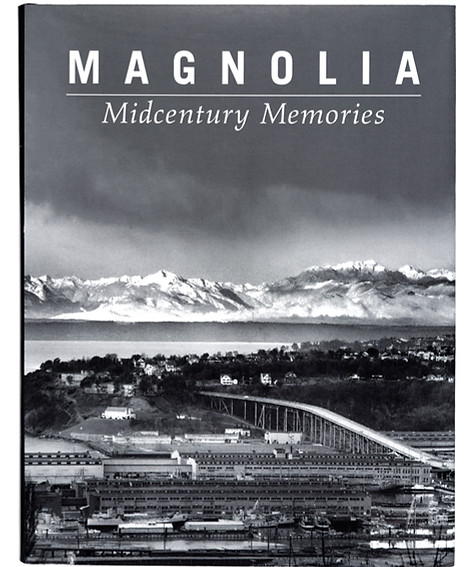
Fig. 19. Cover of MAGNOLIA: Midcentury Memories, published by Magnolia Historical Society, 2020.

Fig. 20. Members of the MAGNOLIA: Midcentury Memories team. Forty-something of our peer editors and co-authors could not be with us on this particular day and we would have never fit—but they were there in spirit!
Front row (left to right): Sherrie Quinton, Whitney Mason, Gail Martini-Peterson, Claudia Lovgren, Dee St. George.
Second row: Guy Besner, Emily Wooton, Greg Shaw, Diane Spaulding.
Third row: Monica Wooton, Eric Berge, Paul Bergstrom, Gene Willard.
Fourth row: Ron Bomba, Mike Musselwhite, Brian Hogan, Wayne Lubin.
Back row: Jon Wooton, Richard Williams, Tom Kildall, Jim Eicher, Jeff Graham.
Courtesy of Jean Sherrard (Paul Dorpat had passed the torch to Jean by this time).

Fig. 21. Book III writers and peer editors meet with Monica Wooton, center left, at the Magnolia Branch Library in 2018 to receive their writing packets and discuss sources, archives, and deadlines.
Courtesy of the Magnolia Historical Society.
Between writing books, the society continued its mission in many other ways: refining its bylaws and membership requirements, teaching Magnolia history and memoir writing in local schools, providing free memoir writing workshops at the library, representation on the Queen Anne/Magnolia District Council, doing outreach at Magnolia’s farmers market, writing columns for the Magnolia News and Magnolia Voice blog, answering specific questions or directing the public to historical information about Magnolia, and annual public meetings.
In addition, the MHS participated in and sponsored significant events and programs over the years. Just some of these include the Korean War medaling at the Army Reserve and eventual ceremony shuttering of the base, anniversaries of MCC and Discovery Park, helping formalize the historic Fort Lawton guidelines, reenactment (the “Nows“) of several archival Magnolia photos for The Seattle Times’s “Now and Then“ column, remembering the last “Taps“ at Fort Lawton, and actress Debbie Dimitre performing as Catharine Blaine and Eleanor Roosevelt.


Fig. 22. Posters of some MHS events.
Image source (for all): Courtesy of University of Washington Libraries, Special Collections, Accession No. 5345-004, Box/Folder 1/18. November 15, 2005; April 6, 2016; April 14, 2016.
Times are a-changing: Ushering in new technologies to continue the mission
After Book III, another printed book was not realistic. It was too costly. The idea of a free, online version of the Magnolia books was suggested in 2024 by Brian Hogan, then co-president of MHS. To the sadness of some and the elation of others, we decided on a model similar to the online Washington state history publication HistoryLink. With creativity and courage, the MHS Board gave direction and financial support, and several volunteers, including Melissa Islam, Amy Plantenberg, Kate Criss, and I worked hard to plan. The pieces came together with one guiding principle: the writing process and the product had to be just as great as the printed books.
The first team to take this on was also all volunteers. There were five writers and seven stories for the Fall 2024 launch of Book IV. Patty McKeehan, Sherrie Quinton, Greg Shaw, Ben Lukoff, and I wrote the first seven stories. Guy Besner, Brian Hogan, and I peer-edited. The MHS Board helped. With bated breath and crossed fingers, we worked hard and celebrated with our traditional book launch and reading. It was a great success.

Fig. 25. Cover of MAGNOLIA: More Memories & Milestones, published digitally for the first time in 2024.

Fig. 26. The all-volunteer team picture in 2025 was outside Fire Station No. 41, a subject in the first collection of the online, ongoing Book IV, MAGNOLIA: More Memories & Milestones.
Pictured left to right: Jon Wooton, Kate Criss, Brian Hogan, Dee St. George, Amy Plantenberg, Carol Burton, Claudia Lovgren, Melissa Islam, Sherrie Quinton, Greg Shaw, Mike Musselwhite, Emily Wooton, and Monica Wooton.
Photo by Clay Eals.
We are now in our third iteration of our free online Book IV, MAGNOLIA: More Memories & Milestones. Articles and memoirs include high-quality color pictures. Project management duties, and the tradition of preserving written Magnolia history, have now been passed down to a younger generation—paid co-managing editors Julia Thompson and Alexandra DuSablon.
All the print books are officially sold out, and reprinting was found to be too costly. The MHS Board, with President Dee St. George leading the effort, made the books available as ebooks for Kindle.
As MHS celebrates its twenty-fifth year, nearly all of the founding members have passed on. But the mission, traditions, and values they set out when establishing the society have been practiced and preserved these past twenty-five years. Each spring, a new group of Magnolia memories will be added to Book IV.


Fig. 27. Calls for writers and peer editors, book launch parties, and readings by authors have always been a tradition of the society. Iconic posters can be seen at many Magnolia businesses announcing the events.
Courtesy of Dee St. George.
Monica Wooton was a founding member of MHS. She was the first president and has served in that role and many others related to Magnolia history for over twenty-five years. Project management and editorial control of the Magnolia History books has now been passed to others. Small nonprofits are hard to keep going, and she is grateful that even when it looked like they could no longer survive, survive they did.
It has been Monica’s incredible luck and privilege to have worked with so many wonderful mentors and people in the writing of Magnolia’s history! Many became lifelong friends. The list includes over 120 volunteer authors, many volunteer peer editors and MHS Board members, the excellent paid editors (Whitney Mason, Maggie Larrick, Christine Clifton-Thornton, Rebecca Pillsbury, Alexandra DuSablon), paid and volunteer copy editors and indexers, (Hal Will, Shirley Will, Judy Goldthorpe, Julia Thompson), and, of course, the talented Paul Langland, hired to design the three print Magnolia history books. In the course of Monica’s many years doing historical research, she visited nearly every public archive in Seattle and a good number of private ones. Archivists were always wonderfully helpful to her and other writers, in particular Nicolette Bromberg, Anne Jenner, Adam Lyon, Ron Edge, Paul Dorpat, Carolyn Marr, Eleanore Toews, Greg Lange, Anne Frantilla, Jeanie Fisher, and Jules Irick.
Besides carrying out the society’s mission, and the creation over the years of a robust collection of Magnolia’s history, she is most proud of the collection established to preserve documents, ephemera, and photos at UW Libraries’ Special Collections. It is full of information for stories told and still to be told and accessible by the public.
Author’s note: Another Magnolia Historical Society led by Steve Lundh had disappeared before the incorporation of the official Magnolia Historical Society nonprofit 501(c)(3) referred to in this article. Research was done from firsthand knowledge, personal files, articles from the Magnolia News, and the Magnolia Historical Society Collection at the University of Washington Libraries’ Special Collections.

Learn more
The Magnolia Historical Society has written and been featured in many news articles. Here are a few. Others can be found by searching The Seattle Times archives, Queen Anne/Magnolia News, and Paul Dorpat’s "Now and Then" website.
-
Lawton School and Magnolia Historical Society working together
-
SNAPSHOT IN TIME: MAGNOLIA | Fort Lawton and the historic district’s constant controversy and change
Finding aids for the Magnolia Historical Society Collection housed at UW Special Collections are available online:

Volunteer opportunities
Volunteers remain critical for small nonprofits to remain strong and viable. The society welcomes those who wish to serve on the board, participate in the book-writing process, or donate monetarily to keep the mission of the Magnolia Historical Society going.
Learn more about writing history and volunteer as a writer or peer editor. If you have anything to donate to the archive—original documents, ephemera or photos—contact info@magnoliahistoricalsociety.org.
The MHS Board members, carrying on this work faithfully, look to the next generations of Magnolians to keep the traditions of the Magnolia Historical Society alive and well for the next twenty-five years.